TU Delft · Vak
WV1
Academic design
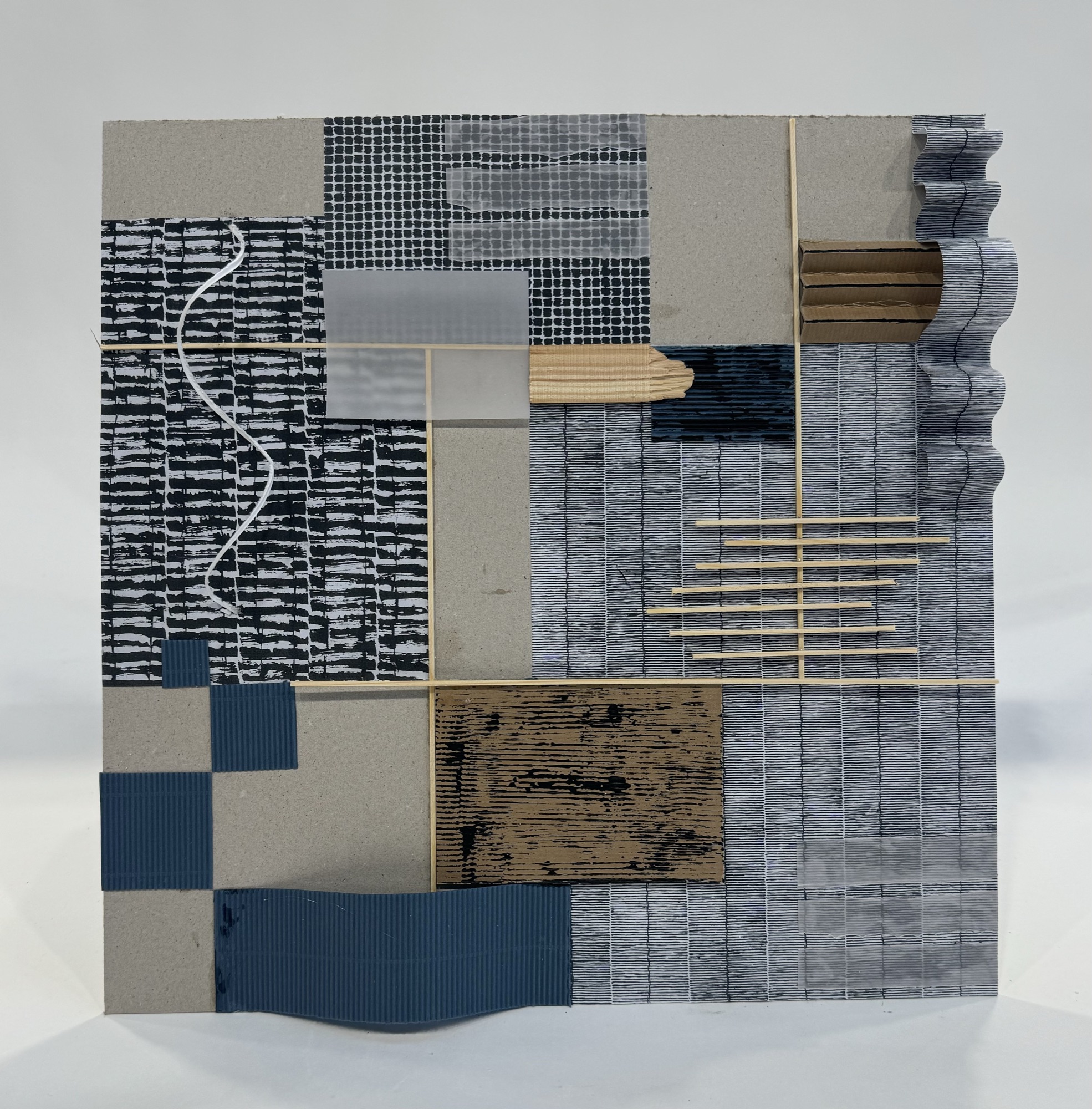
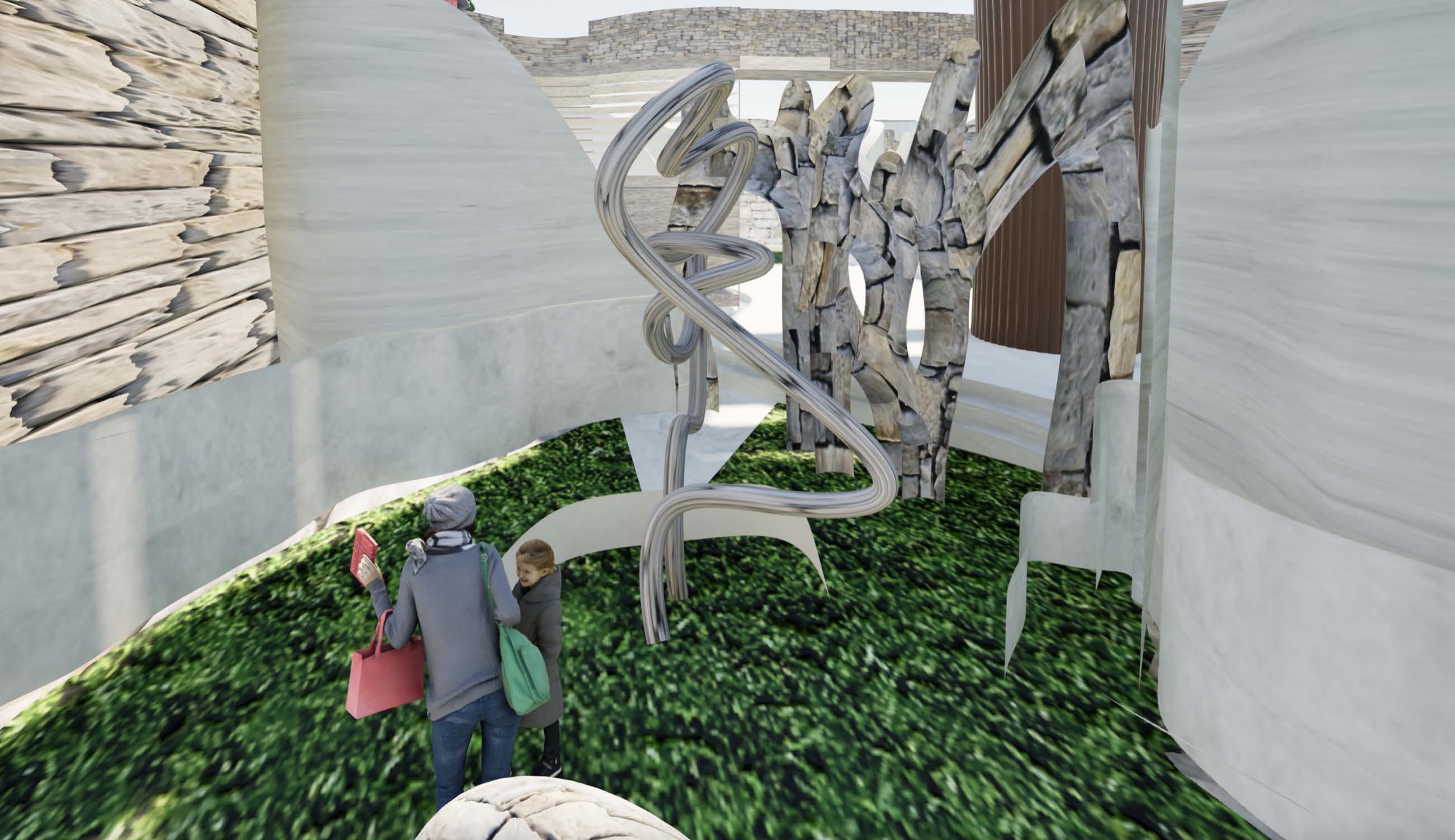
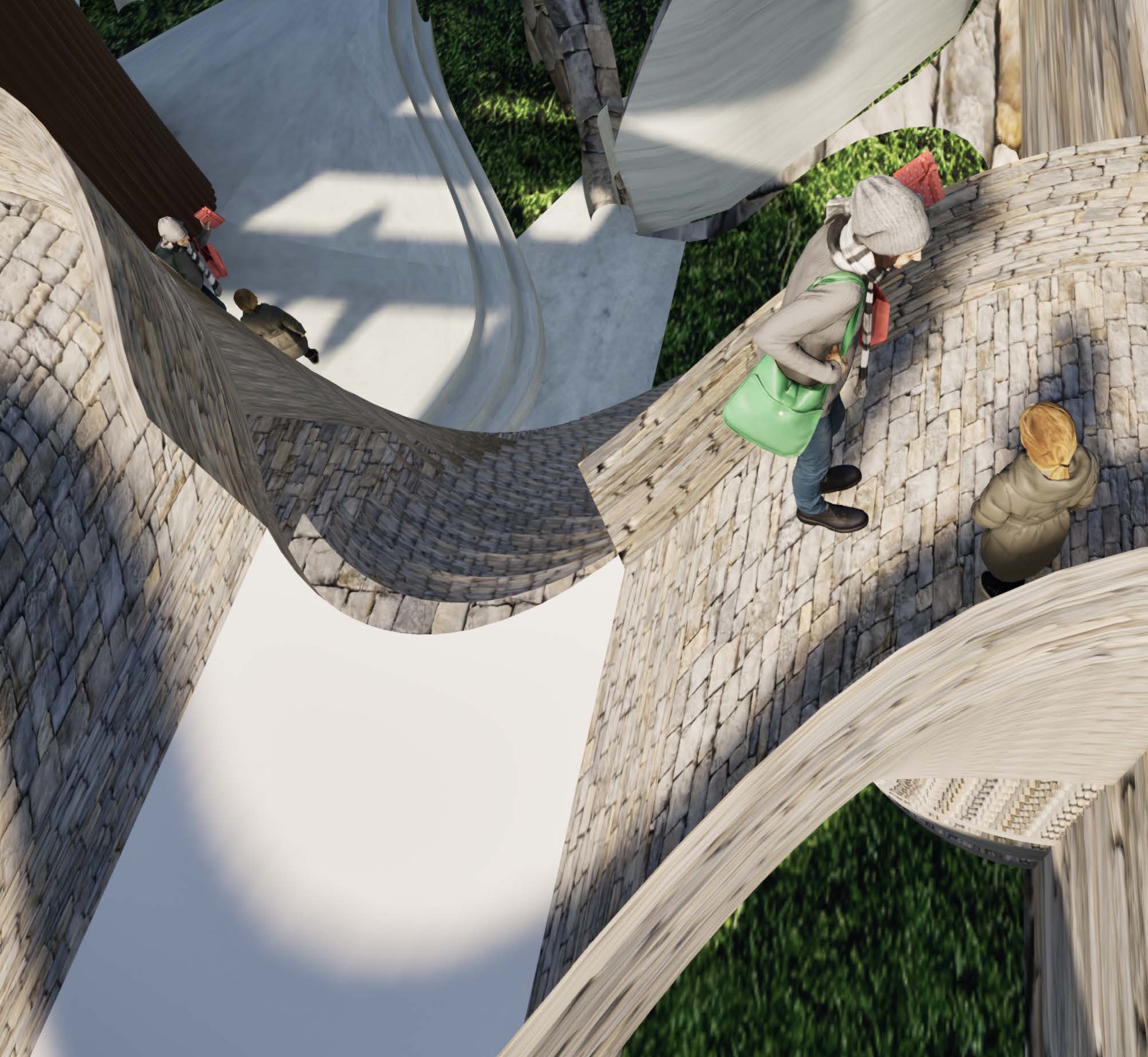
WV1 was a course in which we explored form. The focus was not yet on designing a building itself but purely on investigating shapes and spatial composition. The course consisted of multiple small assignments. The final assignment was called "The Wall."
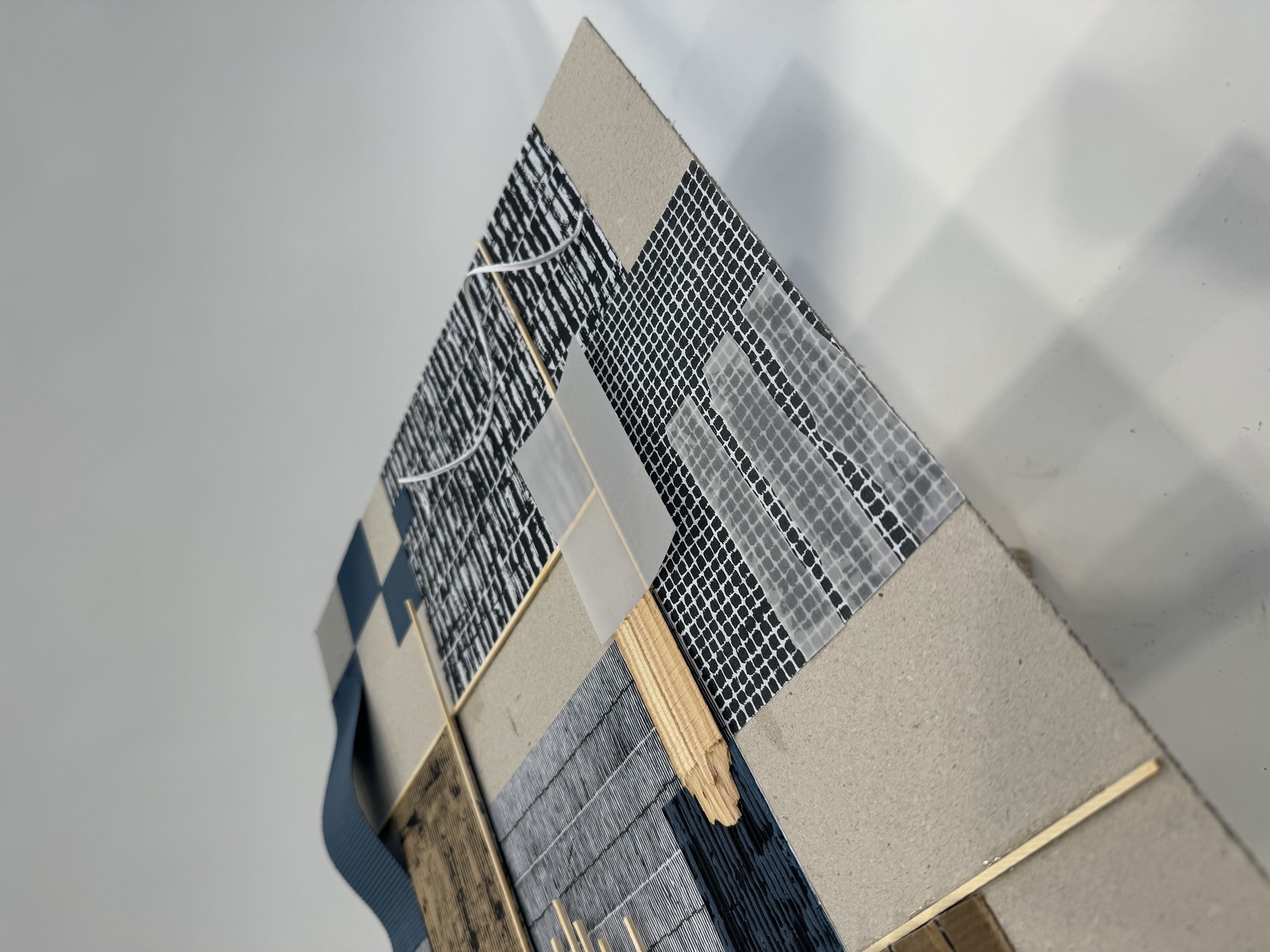
The Wall is not just a flat surface, it acts as an object within the composition, sometimes separating, sometimes connecting, and it must include a passage or opening. Key concepts included proportion and scale, rhythm, openness, plasticity, and material differences. The design was guided by the Fibonacci sequence, which approaches the golden ratio of 1.618. The Wall's dimensions were 190 mm high and 320 mm long. Grey cardboard of various thicknesses was used, with full freedom to choose materials for construction and finishing.
My approach
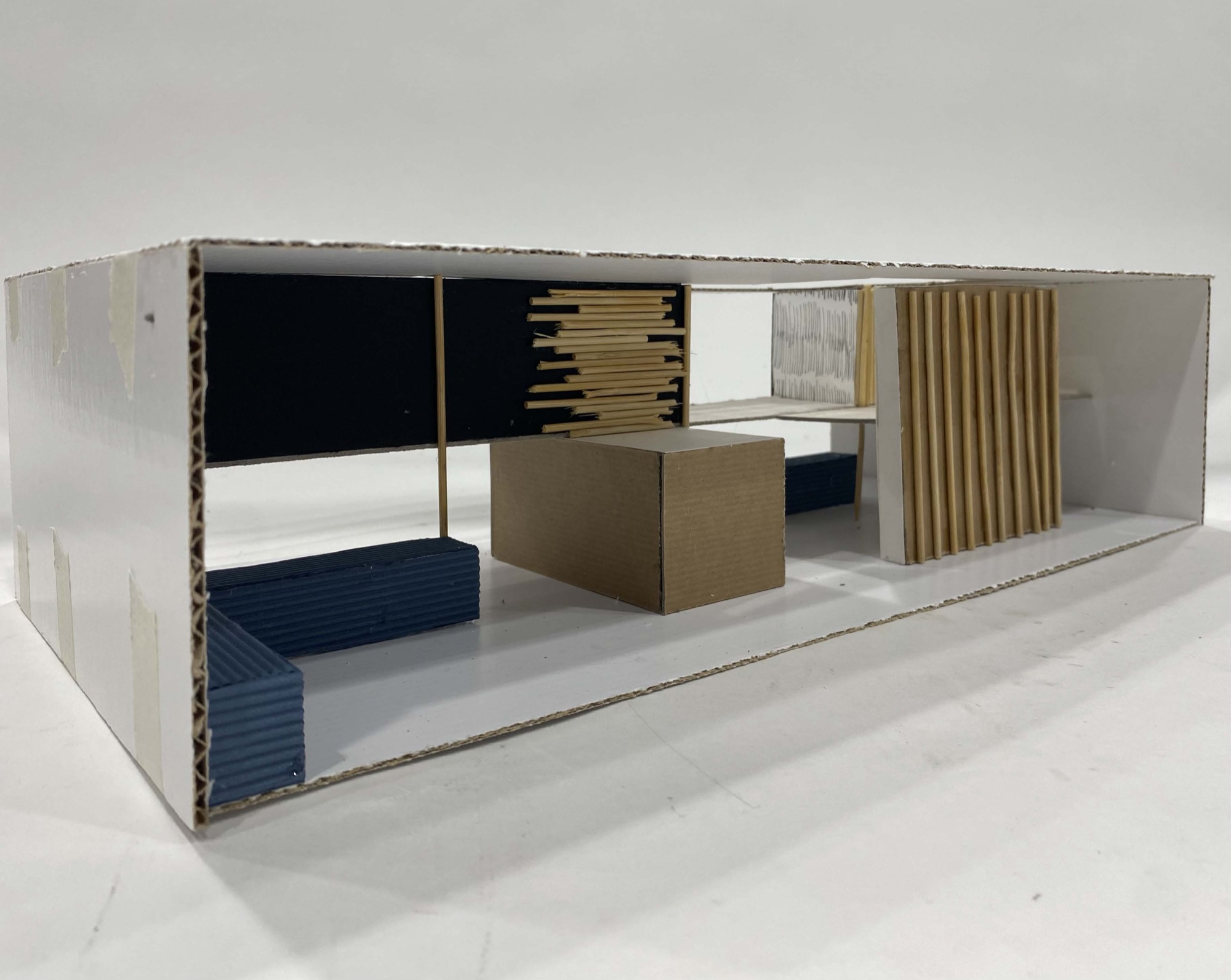
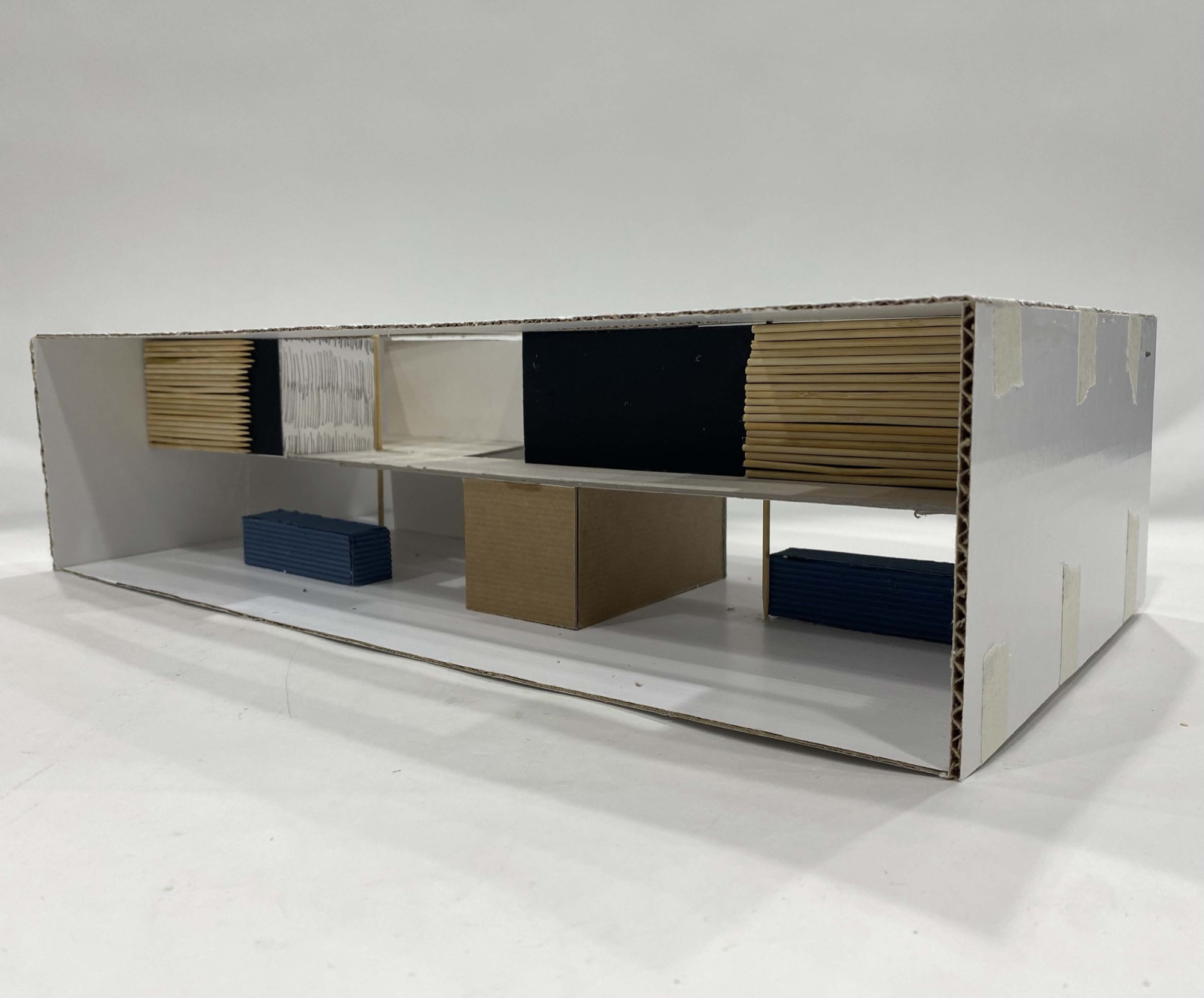
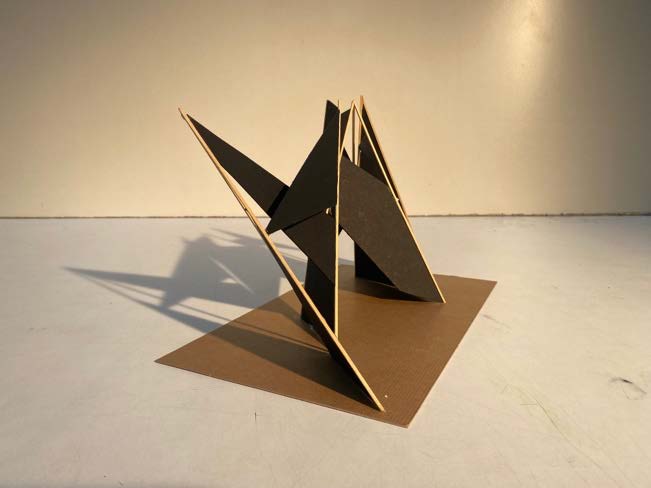
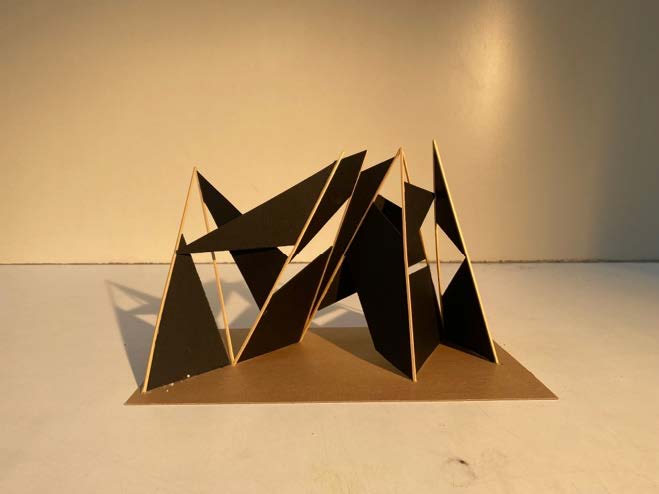
For this project a wall structure was created to explore the interaction between visibility and screening. The process began with folding white paper to create shapes and patterns, which were then traced in wood to form a sturdy skeleton. The paper was removed, leaving a framework of wooden sticks.
Thick black paper was inserted between the sticks, creating a play of solid and open areas. Some parts allow light and views through, while others block them, balancing openness and enclosure. The wall functions as a divider but also connects the two spaces, with light, shadow, and material contrast making it a visually engaging structure.